
Hydration starts before practice even begins
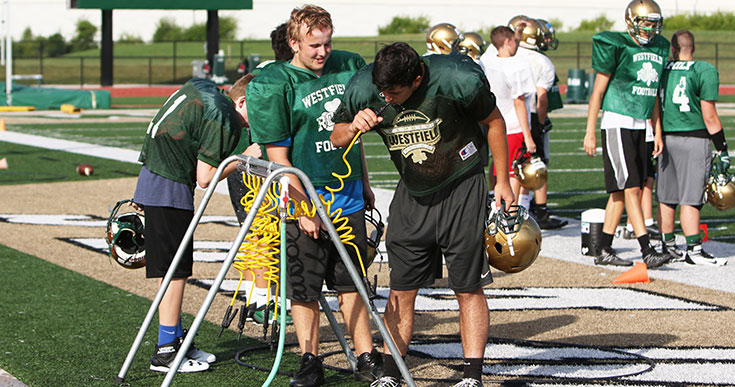
It’s been a hot summer across the United States, but as the calendar gets closer to fall, football’s regular rituals are starting back up again.
It's not unusual for 90-degree days to greet youth football practices and scrimmages, which most often carry on as scheduled.
And while there is increased concern for player safety when the mercury rises, doctors and coaches alike see no reason to keep players off the field – as long as the proper precautions are taken.
“Practicing and playing (football) in extreme heat can be safe. There are so many mechanisms that help with that situation,” said Lindsay Langford, a sports dietician at St. Vincent Sports Performance in Indianapolis. “It’s about being smart.”
That starts with hydration. Langford has a simple rule she encourages coaches to install with players in order to keep core temperatures from rising.
“Hydration has to happen before practice,” Langford said. “Take half of your body weight and drink that in ounces per day. Start when you wake up and create a hydration schedule that keeps you on track, but remember, it doesn’t include what you lose during a workout, so you have to replenish that as well.
“I recommend players get weighed on their way in (to practice) and again on their way out so they can add in what (fluids) their bodies lost.”
Along with pre-practice hydration, Danny Martinez, president of the Miami Extreme Youth Football League, ensures his players take several hydration breaks throughout practices and games to prevent heat-related illness.
“In Miami, we had 90-degree weather into most afternoons this summer,” he said. “Our league procedure is you cannot go more than 30 minutes without a hydration break. Water stations have to be available to players at all times. On game nights, referees stop play halfway through each quarter so players can get an additional water break. Those are mandated stoppages.”
Heat stroke, heat illness, fatigue, exhaustion, reduced mental capacity and even coma can result from extreme heat, especially in young players who are not properly hydrated and monitored. They represent the worst case scenarios, but Langford contends they’re easy to prevent.
“Just pay attention to the body language of athletes,” she said. “Look for those signs of fatigue. Look at the clock, and don’t keep players out (on the field) for too long without a break.”
Martinez knows the risks of not handling player safety properly and stresses that with his coaches. His league has had no reported heat-related issues, and he’s working to help his players find a balance between the sport they love and Mother Nature.
“None of our teams have reported any cancellation of practices or games this year,” he said. “We are so used to playing in the heat that a couple of degrees here and there aren’t going to make any difference.”