
5 common signs to tell if your child has a concussion
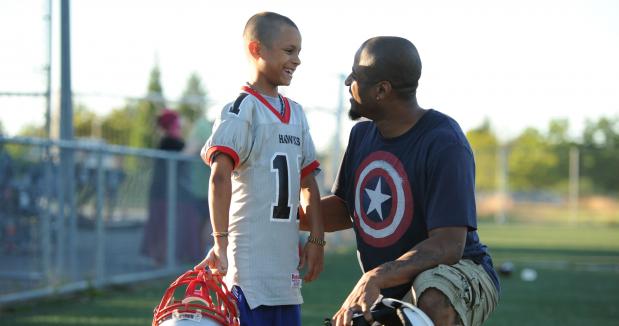
Every child is different, which means every injury is different.
Coaches and parents can read a list of concussion signs and symptoms, but not all concussions show the same way. There can be significant differences.
So whether on the football field, basketball court, playground or around the house, how can you tell if your child has a concussion and needs to see a medical professional?
USA Football, the youth football partner of the Baltimore Ravens, educates more youth and high school coaches through its Heads Up Football program than any organization in the United States. Heads Up Football is a comprehensive collection of resources and medically approved protocols to create change and advance players safety health when it comes to concussion awareness and recognition, heat and hydration, proper tackling fundamentals and equipment fitting. More than 5,500 youth leagues and 750 high schools in 2014 participated in the program, covering more than 150,000 coaches and nearly 1 million players. Learn more at www.usafootball.com/headsup.
A concussion cannot occur without a direct or indirect blow to the head. But not all impacts lead to concussions. Here are five tips from USA Football Medical Director Dr. Patrick Kersey to guide coaches and parents in identifying concussions in young athletes.
- Change in personality. If a child is suffering from a concussion, there could be a drastic change in his or her personality. “Nobody knows your kid better than you,” Kersey said. “So trust your instincts.” If classic concussion symptoms are not apparent, you should be able to detect behavioral changes or personalities being “off.”
- Minimizing symptoms. Today’s athletes are hypercompetitive. They don’t want to sit out or miss practices or games, so they might minimize their pain or symptoms by not letting you know. “Oh, I just have a headache. … I’m fine.” If the headache lasts, it might be a concussion.
- Fatigue. If a child is more tired than normal or if you notice a change in sleeping pattern, it could be a concussion. Pay close attention to sleeping patterns especially if you notice change in personality and behavior. Fatigue is a common concussion symptom.
- Kids asking for medicine. Most kids won’t ask for Tylenol or Motrin on a normal basis. This can be an indicator that your child has a concussion. It is your responsibility to ask why instead of just giving the medication. Ask: “For what?” “A headache?” “How long have you had the headache?”
- Abnormal school performance. Kersey shared a story from his high school football career. He was a 4.0 student and a competitive all-around athlete. One Friday night, he took a big hit in a football game, and the rest of the week he didn’t feel like himself. He failed a chemistry quiz that week – 0-out-of-10. Time passed, and eventually everything returned to normal. It didn’t click for him until a lecture in college that discussed how abnormal school performances is a sign of a concussion. If your child is putting off finishing homework or studying and this is out of the ordinary, ask how he or she is feeling. It could be a concussion.
Younger children may not be able to articulate what is wrong, or they may be too scared to say. As a 5-year-old, I broke my arm playing on a backyard swing set. I told my parents that I “wasn’t feeling well” and ran inside to lie on my bed. I was scared and even thought I might be in trouble. It wasn’t until after they asked me many questions that I told them I hurt my arm.
Fast forward to when I was 10, I broke my arm again. This time was different because I told my parents right away that I thought I broke my arm. Age is a key factor in awareness. Younger children may display this same behavior with a concussion.
Attention and open communication are the most important details in figuring out if a child is suffering from a concussion. Ask the child how the game or practice went, if he or she is feeling well and make sure to look for these five behavioral and personality changes to help identify a concussion.