
5 decrees for fostering better communication between coaches and parents
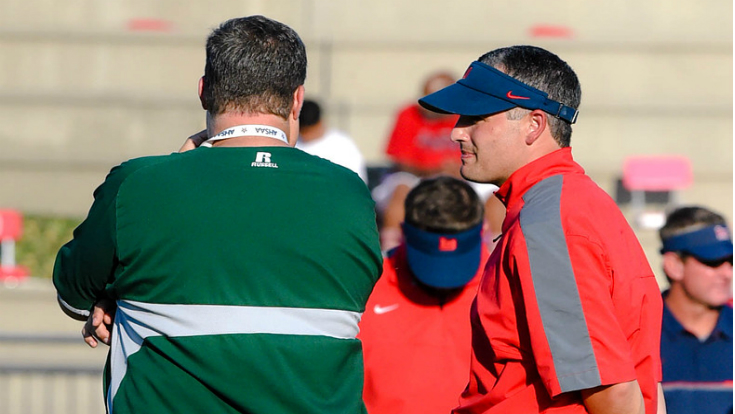
To say an adversarial relationship between coaches and parents of student-athletes exists would be an understatement. Of course, there are exceptions. Unfortunately, that’s exactly it…they’re exceptions.
So, we can talk about the strife and contention between coaches and parents all day long but finding a solution would serve our time better.
In the spirit of seeking out solutions, I offer five decrees for coaches and parents to adopt to foster better communication.
Decree #1: Thou shalt honor each other for the betterment of the student-athlete. Respect for one another should be the #1 priority for every communication encounter. Isn’t it supposed to be all about the kids anyway? Why are you all doing this? Sports serves an important role in developing young athletes to reach their potential, to excel at a skill, and to mature as a team player. If coaches and parents aren’t honoring each other with mutual respect, then what does that say to the student-athletes? It’s okay to bicker, to hurl insults, to throw punches? Uh, no!
Decree #2: Coaches and parents shall acknowledge that there are goals more important than winning. Everyone wants to win, but life consists of more than just winning game after game. It’s more than earning that championship title and trophy. Coaches and parents need to rally together to help student-athletes reach their sports goals as well as their academic and life goals. Pre-season, mid-season, and post-season roundtable meetings might prove helpful so everyone is on the same track.
Decree #3: Thou shalt keep the student-athlete’s ambitions front and center. We’ve all heard about parents who live vicariously through their student-athlete; those who could never play sports yet now they have the chance to re-live their teen years by watching Johnny Joe play on the gridiron. Coaches with shattered dreams of playing in the big leagues, or whose sports slate was wiped clean by a devastating injury, can now coach to fulfill their crushed ambitions. Let’s come back to the student. The athlete. The student-athlete. Do the coach and parent know what Kool Kaleb’s ambitions are? Take time to find out what the student-athlete wants to achieve and focus together on helping him accomplish his ambitions.
Decree #4: Thou shall not expect the student-athlete to go pro. There will always be a handful of student-athletes who have the talent, mindset, and potential to go pro. Let them. But for coaches and parents to expect an average player to be better than they are, is the stuff that creates no-win situations. Sure, an average high school player can improve his game and end up getting a college scholarship, but even that doesn’t guarantee that he will make it to the pros; in fact, he probably won’t. Statistics prove that from over one million high school football players, only 1.6% reach the NFL. Coaches and parents must openly and honestly communicate about Petey’s skill level and create a game plan to help him succeed outside of sports.
Decree #5: Coaches and parents shalt establish clear and concise expectations. Fostering better communication between coaches and parents starts fundamentally by creating succinct expectations, then re-visiting those expectations throughout the season.
A few expectations parents might have for coaches:
- Coaches will treat all players on the team fairly
- Coaches will not use profanity at any time during practices and games
- Coaches’ instruction will focus on skill correction and not on the athlete as a person
- Coaches will send regular communication of schedules, equipment needs, and ways the athlete can practice at home
A few expectations coaches might have for parents
- The student-athlete will arrive to practices and games on time
- Parents will help their youth practice drills at home
- Parents must demonstrate positive, supportive, encouraging behavior at games
- Coaches should expect parents to lend a hand with team needs such as general transportation and fundraising efforts.
The bottom line solution to foster better communication between coaches and parents is to realize that all the effort, all the time, and all the blood, sweat, and tears are for the student-athletes. When there is friction, passive-aggressive mental games, and toxic communication, nobody wins. High school football offers the opportunity for student-athletes to have fun, learn some life skills, and participate in teamwork. If parents and coaches alike set their eyes on creating a positive athletic experience for the student-athlete and possess a sincere concern for his overall well-being and development, everyone wins.
Michelle Hill, the Strong Copy QB at Winning Proof, helps athletes tell their stories by ghostwriting books. She works exclusively with pro athletes, coaches, team owners, and other sports professionals by helping them move their book idea from the red zone to the end zone.